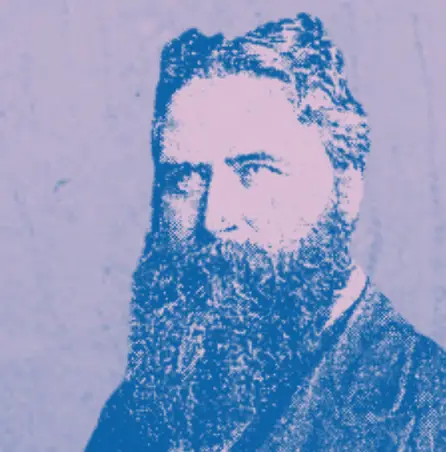

*Brian O’Looney.
THE LIFE and times of an Ennistymon native who was a distinguished celticist and professor will be recalled at the launch of a book.
‘Brian O’ Looney (1828-1901) Clareman, scholar, poet and Gaelic Revivalist’ will be launched at the Inn at Dromoland on Thursday April 3rd between 6.30 and 8 p.m.
The author of the book is Kilmaley native, Professor Peter A. Daly, a retired Medical Oncologist and Associate Professor of Medicine from St. James’s Hospital and Trinity College, Dublin respectively.
Aside from numerous scientific publications in the medical field, he has written Mary Mercer’s Dublin legacy 1724–2024. He was the Clare Association Dublin Clare person of the year 2023 in recognition of his contribution to cancer care in Ireland. His maternal great grandfather was Martin O’Looney, younger brother of Brian.
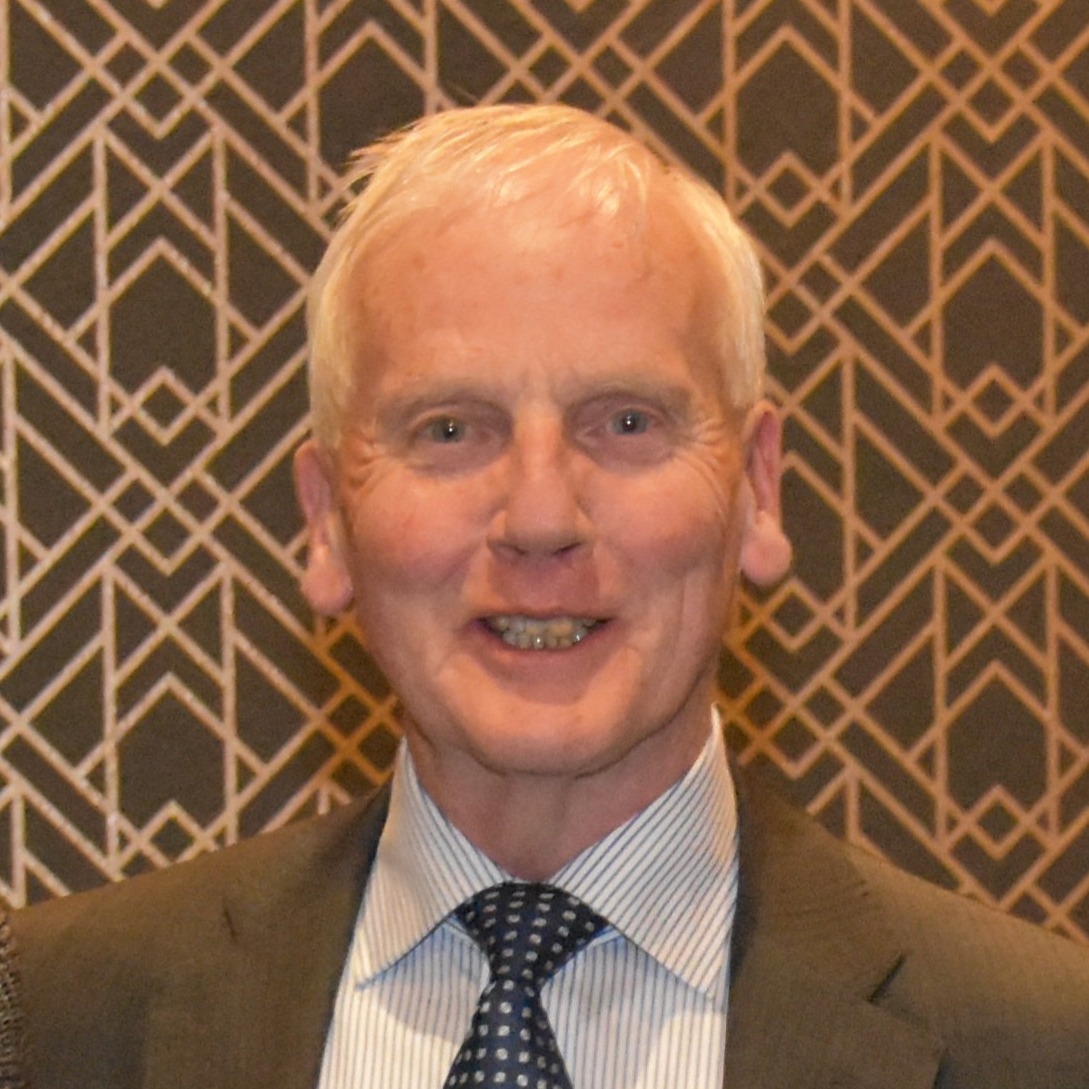
The panel of speakers at the book launch will include chairperson, Liam Ashe, retired history teacher at St. Flannan’s College and Director Balo Children Ireland, Dr. Fergus Kelly MRIA, retired Senior Professor, School of Celtic Studies of the Dublin Institute for Advanced Studies and great grandson of William Smith O’Brien, Michael Talty, Executive Librarian, Clare Local Studies Centre, Causeway Link, Ennis, Dr. William Nolan, Emeritus Professor of Geography, University College Dublin and Director of Geography Publications which has produced a series of ‘county books’ for all thirty–two counties and Peter Daly, the author.
In his new book, Professor Daly states that Brian O’Looney (1828–1901) was born to William Looney and Mary Enright of Monreel, Ennistymon within weeks of the Clare election which returned Daniel O’Connell to Parliament as M.P. for the county.
O’Looney’s home district of North-West Clare was Irish-speaking, both local and travelling scholars did much to foster an interest in the transmission of folklore. Following an education at the hedge school run by Patrick Kelleher in the old chapel at Clouna, supplemented by practical education at Cahersherkin Model Agricultural School, founded by Sir Lucius O’Brien, he developed an interest in collecting and transcribing old Irish manuscripts.
Initially he supported Daniel O’Connell’s Loyal National Repeal Association, but when the Young Ireland intellectuals severed links with O’Connell in 1846 he sided with them.
There is no independent proof of his claim, made in poetic compositions, to have participated, alongside William Smith O’Brien, in the 1848 Rising at Ballingarry, Co. Tipperary. William Smith O’Brien’s sentence of transportation was remitted in 1857 and he returned to Ireland where he renewed his interest in Irish studies, especially the Gaelic literature relating to the O’Briens of Thomond. He sought O’Looney out and between then and his death in 1864, employed him as a collector, scribe and poet.
O’Looney followed his patron to Dublin in 1863 and spent the rest of his years there, absorbed in academic pursuits at the Catholic University of Ireland (CUI) and the Royal Irish Academy (RIA). He became a member of the RIA in 1871 and Professor of Irish Language, Literature and Archaeology at the CUI in 1875. He assisted William Kirby Sullivan at the University in producing the three volumes of On the Manners and Customs of the Ancient Irish, derived from Eugene O’Curry’s papers and lectures. Among his major contributions at the RIA was his work with Joseph O’Longan on the lithographic series which brought Irish manuscripts to a much wider readership.
In 1876, he was a founding member of the Society for the Preservation of the Irish Language (SPIL), a forerunner to the Gaelic League. Their achievements included successful campaigns to have Irish accepted as part of the curriculum at various levels and producing educational material in the Irish language for students. A committed nationalist, he did not live to see an independent Ireland but he did lay some of the foundations for that achievement and is among those credited with inspiring the Celtic Revival.
He was almost fifty when he married a young widow with origins in Corofin. Susan Curtin already had four children and they also had four together, two boys and two girls. They enjoyed twenty four years of marriage, happy it appears but beset by financial troubles which necessitated his receiving external support to maintain his household. He died at his home, Grove Villa House, Crumlin on December 3, 1901 and is buried in Glasnevin Cemetery.