

A recent review was conducted into the widely circulated claim that 97% of all climate scientists had concluded that man made actions were contributing to climate change. The reviewer pointed to the fact that the claim was over a decade old and that it needed to be re-examined.
What Welsh environmental writer Mark Lynas found was that between 2012 and 2021, that figure of peer reviewed climate science papers blaming climate change on human activity had jumped to 99.9%. There is no doubt in the scientific community but that our collective actions are changing the way the climate of this planet is behaving.
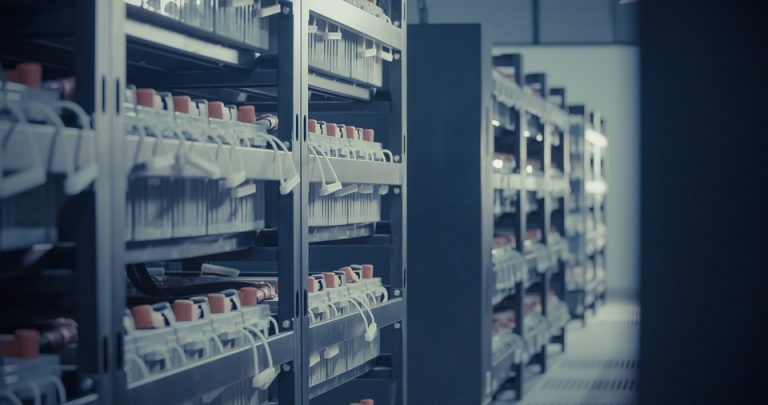
Yet, that is often where the clarity on the debate ends. The debate as to how to address it is much murkier. This has cropped up its head locally in recent months with a proposal to build a data centre in Ennis becoming a lightning rod for discussing on our country’s future energy and sustainability policies. Feelings on the topic have been running high as discussions about the proposal have evoked heated debate.
Firstly, it should be stated that the world needs data centres. If we are to press ahead with a paperless, digital economy and society, we need somewhere to store the large volumes of information that such an existence generates. I’m not talking about your Facebook photos from a birthday party 12 years ago for a person you haven’t seen in 9 years. What we do need to store is order processing information for online purchases, customer complaints, medical records (although here in Ireland we are still far too reliant on paper records for such purposes) and data from various Government agencies.
Data centres are here to stay and, as luck might or might not have, depending on your point of view, Ireland is by far one of the most ideal places on Earth to locate them. Our cool temperate climate, along with lack of risk from natural disaster, make us a prime candidate for efficient data storage and, more pertinently, sustainable storage. It takes less energy to store data here and as such, allowing it be stored in Ireland, is, effectively, part of the country doing our bit for the global good to try keep global energy consumption down.
That said, if the world and their mother want to store data here, then it should be those looking to do the storing that pay the price, not the ordinary citizen as our national grid comes under increasing strain. Some projections show that proliferation of data centres over the next decade could lead to a 30% increase in the load demand on the electricity supply in Ireland, putting pressure on a system that is already struggling to meet generation demand as we switch off fossil fuel burning power plants, like those in the Midlands, with Moneypoint set to follow suit. However, the renewable energy generation capacity is not coming on stream fast enough to meet this switch off and increased demand levels.
Once again, NIMBY-ism is one of the key reasons to blame for this. For instance, the North-South interconnector between the Republic and Northern Ireland has widespread support as a much-needed piece of infrastructure on this island, so much so that even the DUP are behind it.
Nevertheless, fierce local opposition to the routing of the connector through the likes of Meath and Louth has seen this project stall for the guts of a decade as our supply options have dwindled. If we are serious about both a greener and digital future, wind and solar generation will need less delays, as will projects like the interconnector, in order to ensure energy supply into the future.
As Gerard Howlin put in on a radio interview recently, ‘Ireland is the Saudi Arabia of Europe when it come to renewable energy potential’, yet we are painfully slow to realise that potential, usually due to misguided opposition, often based on spurious claims. Take the data centre for instance. One claim I saw was that it would require 1 million litres of fresh water every day. This is utter divorced from reality. From a point of view of hydrology alone, just a system to more 1 million litres every day would be monumental. The system may need 1 million litres but, much like a radiator system, once it is filled, it is then circulated within the system on an ongoing basis. The centre should come with conditions of self-sufficient renewable energy generation, via solar and/or wind power, and an option to sell that to the grid even.
However, let’s not cut off our nose to spite our face. Otherwise, when we ask other countries to make cuts, they will scoff and point to our objections to highlight the fact that, underneath it all, we aren’t serious about climate change on a global scale at all.