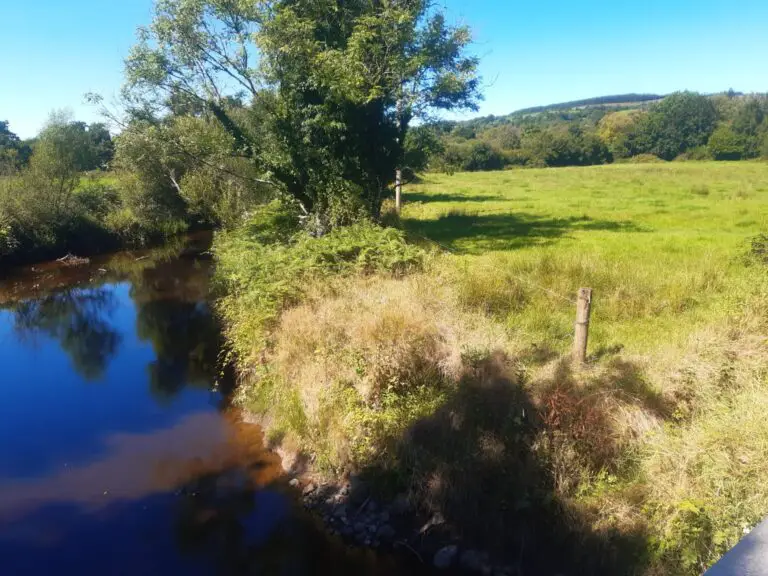

River Graney at New Bridge – Aine Donnellen / DJ Lane.
A newly published study is looking at ways to protect rural communities and the environment in North East Clare.
By Ross O’Donoghue
Forestry owners and farmers are among those with a role to play, according to scientists for the Local Authority Waters Programme and a report just published on behalf of the Waters of LIFE Project.
The Graney Demonstration Catchment Desk study focuses on waterbodies in North East Clare and Galway as part of an EU initiative to protect pristine waters.
The report also offers insight into the links between water quality and the protection of under threat species in Clare’s ecosystem. Aquatic insects such as mayfly can be an indicator of clean rivers and are important food for small birds such as skylark and meadow pipit.
These birds are, in turn, food for the Hen Harrier, one of Ireland’s most spectacular but under threat birds of prey.
The Slieve Aughty mountains are a much beloved Special Area of Protection for Hen Harriers while also covering most of the Waters Of LIFE Project catchment area in North East Clare.
By establishing such connections between local catchment areas and the environment and communities around them, the project hopes to demonstrate how small and local measures can contribute to its success.
Support for farmers will be a key element of the project. Teagasc and the Department of Agriculture, Food and the Marine are among the project partners and help around the pressures of effluent management will have a role to play.
The Forest Service and Coillte are also project partners and practical measures around afforestation have also been identified as mitigation options.
Actions which focus on sediment loss have been singled out as a possible route to achieving Water Framework Directive targets.
Sediment is naturally occurring material which enters water systems through weathering and erosion but increases in sediment through agriculture and forestry can greatly reduce water quality and the condition of freshwater habitats.
That’s why measures such as avoiding direct drainage to waterways in forested areas and keeping plants and trees as a buffer between rivers and the surrounding lands are so impactful in the protection of water quality.
Domestic wastewater treatment systems have not been identified as a significant pressure to at risk waterbodies, according to the report.
The full Graney Demonstration Catchment Desk Study can be found here and more information on the Waters Of LIFE project is available at www.watersoflife.ie