
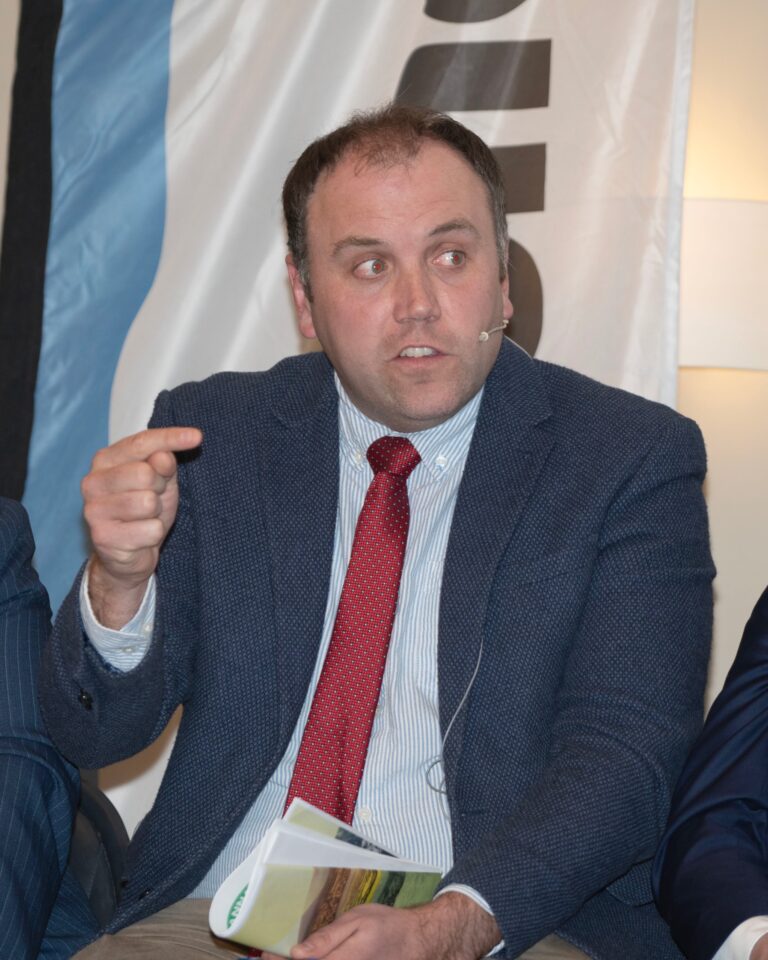
*Cathal Crowe TD (FF). Photograph: John Mangan
UPDATED onshore wind energy guidelines need to be published as a matter of urgency, a Clare TD has said.
Existing Wind Energy Development Guidelines which were published in 2006 are currently used to govern all proposed developments in this sector. A review of the guidelines is currently underway.
Wind farm developments over the past nineteen years have to follow the 2006 guidelines.
Clare TD, Cathal Crowe (FF) noted, “When those guidelines were produced, the installed wind energy capacity was less than 1000 MW. In the two decades since, the total installed energy capacity has increased five-fold, all of which has come under the same 2006 guidelines. In addition to the increase in windfarms and proposals for windfarms we have seen the height of wind turbines more than doubling, with plans for windfarms in parts of the country having a wing tip in excess of 200 metres.
“These are mammoth developments and as the plans are expanding and getting bigger and taller, it is vital that the guidelines which planners use to assess the appropriateness of these windfarms needs to be urgently updated and published,” he said.
Across the county, there are several planning applications for developments of onshore wind farm developments. “Local residents are citing concerns around aspects such as setback, noise, shadow flicker, community obligation and size. Any updates to the guidelines may directly address elements of these aspects yet if they are published after planning for a development is granted, it will be too late to retrospectively apply these conditions to developments. Therefore, it is imperative that the updated wind energy development guidelines are urgently publish,” Deputy Crowe said.
Community engagement must get greater prominence in updated guidelines, he argued. “Among the updated guidelines, I think it is vital that the need for and importance of community engagement is particularly highlighted. So often when a development is being proposed, a leaflet drop might be organised but other thorough forms of engagement, such as public community meetings, are not properly organised and this leaves a lot of residents with serious questions about how developments will impact their daily life. This can lead to deep-rooted resentment in communities and can leave so many important questions unanswered. I think it is crucial that appropriate levels of face-to-face engagement is outlined for proposed developments.
“The Government has plans for 80% of our energy being generated by renewable sources by 2030, including 9,000MW of onshore wind energy generation. I appreciate that it is important that the guidelines being prepared are thorough, fit-for-purpose and contain appropriate futureproofing, but these developments are progressing already and it will be too late for communities affected by issues not addressed by out-of-date guidelines. We absolutely need wind energy generation but these turbine sites need to be appropriately sized, in the right locations and built in collaboration with the communities they will be based in”.