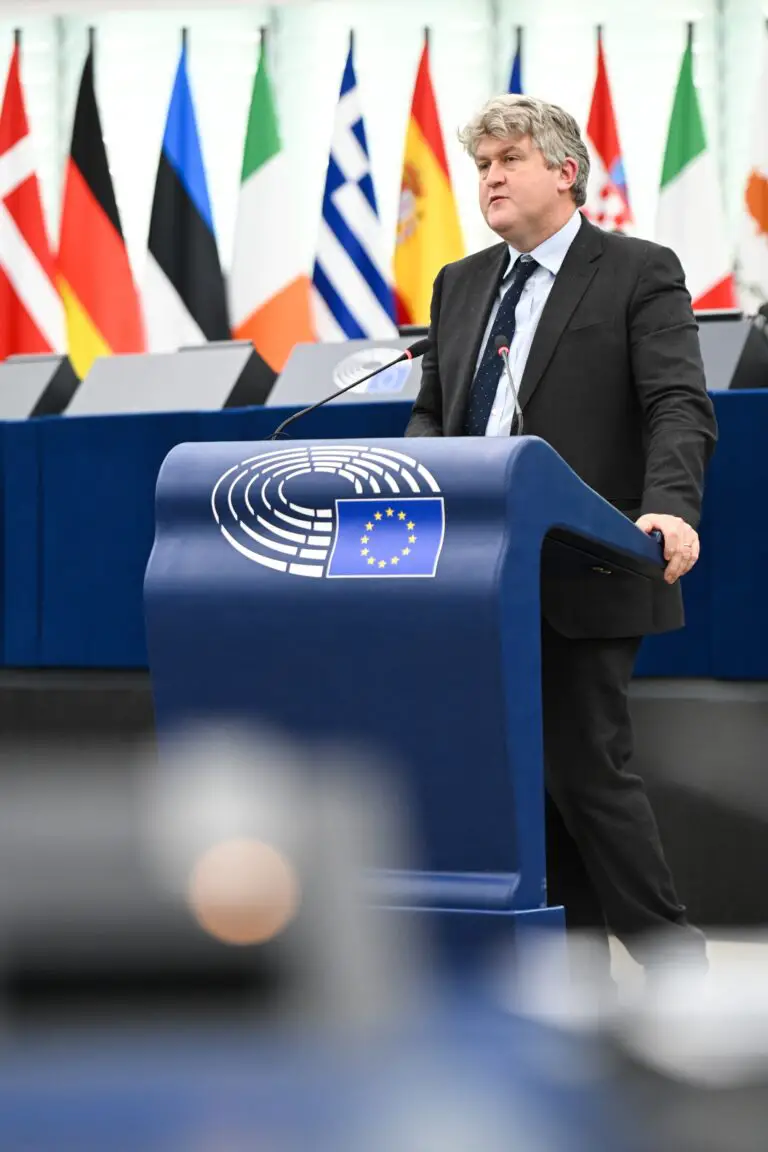
*Michael McNamara MEP (IND).
IRELAND SOUTH MEP, Michael McNamara (IND) has said use of public transport should be made free while the conflict continues in the Middle East.
Scariff native McNamara has called on the Government to introduce free public transport across the country.
His comments come following a warning from the International Monetary Fund (IMF) that “all roads lead to higher prices and slower growth worldwide” should the conflict in the Middle East continue to throttle the amount of oil, gas and fertiliser making its way out of the Gulf.
In a statement to The Clare Echo, McNamara outlined, “The Government’s call on households to cut fuel use is meaningless unless it concentrates on encouraging the public to use alternatives. Public transport needs to be made free for users for the next six months. This would cost up to €275 million, based on a 2023 report commissioned by the National Transport Authority (NTA) from Ernst and Young.
“It must be acknowledged that this is a significant sum of money but it is less than the amount the Government is expecting to spend on the upcoming six-month EU Presidency and is small compared to the billions of euro thrown around by the Government during the COVID era,” he added.
McNamara continued, “Making buses, trams and trains free is a relatively easy measure for the Government to implement and one that will make a difference to ordinary people, as it will result in a new focus on public transport alternatives”.
Based in Washington, the IMF in a stark message warned that countries on all continents will be affected and a rise in energy and food costs would harm economic growth this year and could leave lasting scars on the global economy. The word of caution came hours after US President Donald Trump threatened
to obliterate Iran’s energy infrastructure unless it agreed to a peace deal.
Chief economist Pierre-Olivier Gourinchas was among the main department heads to contribute to the IMF’s notice. The IMF said governments with high levels of borrowing will also have limited access to funds that could be used to cushion the worst effects of the crisis. “Although the war could shape the global economy in different ways, all roads lead to higher prices and slower growth”.
Forecasts for sharp rises in the cost of gas and electricity in Europe next winter are forcing governments to consider higher subsidies and welfare payments to the worst-affected households. “In Europe, the shock is reviving the spectre of the 2021–22 gas crisis, with countries such as Italy and the UK especially exposed by their reliance on gas‑fired power, while France and Spain are relatively protected by their greater nuclear and renewables capacity”.
About a third of fertiliser production travels through the strait of Hormuz, pushing up prices. UN Food and Agriculture Organisation projections indicate that global prices could average 15% to 20% higher in the first half of 2026 if the crisis persists.