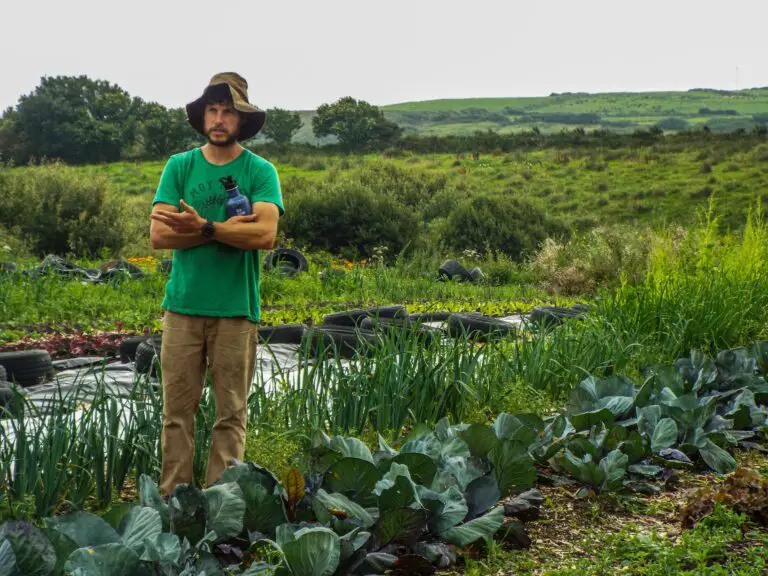
*Fergal Smith.
Community led sustinable farm, Moy Hill Farm are hopeful of providing a structured training facility while continuing to drive community farming and the education of sustainable practices.
Established as a farm that provides a direct connection to the community, Founder Fergal Smith believes that Moy Hill Farm can pave the way for the future generation of farmers looking to turn their hand to regenerative farming, allowing them to “understand their potential for great change through a different type of land management.”
Recognising the decline in diverse farms that fail to integrate eco-system services and tether a strong line of trust with the local community, Fergal hopes to provide a structured training facility at Moy Hill that will offer real educational value to younger farmers and allow them to move away from conventional methods and transcend cultural norms.
“Diverse farms are what makes you resilient. It’s really important to have different streams of income. If you only have one enterprise, you are very fragile,” he states.
Moy Hill are receiving funding for an on-site training facility and commercial kitchen. The training facility will facilitate weekend courses, 10-day courses and enable younger farmers to get trained up in regenerative practices. Here they will become familiar with the benefits of no chemicals and tree planting.
Fergal comments: “We all want to learn these new ideas but who is teaching them? This is the irony. We have all the science and all the great papers coming out telling farmers what to do but there is no real education of these systems on the ground. It’s no offence to Teagasc, but they would very much be pushing the more conventional style. What I am trying to do is get the young, interested farmers of the future to see what a mixed diverse farm looks like.”
He believes regenerative farming is the most progressive, sustainable way to go, describing it as a different type of land management, with minimal conversion costs for farmers. Regenerative farming accommodates more wildlife, a stronger ecosystem, better water quality and looks at regenerating the landscape, he explains. “Each year, the land is regenerated. Organic farming is simply not doing enough. Neither is horticulture. Farmers hold the key, and it is very exciting.”
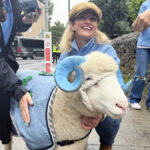
Moy Hill Farm was started over seven years ago by Fergal, as a community garden. Growing from a half-acre to 67 acres, Fergal has realised his dream of both getting people involved in community farming and teaching people sustainable practices. Holistic management training has taken place on site over the last four years. This is a nine-day course that has enabled the farm to become a true learning hub. Farm tours and Q&A sessions are Fergal’s personal favourites and allow interested individuals to understand and later apply the same principles in different areas.
“This holistic management gives you a framework to manage your farm and you can watch to see if the land is getting better or worse. A service that they provide is called Ecological Outcome Verification (EOV). We had it done in August and we were the first farm in the country to have this type of monitoring done. Basically, they go to each field on your farm and ask a series of 21 questions on how many insects are there, how many types of seeds are in the grass and they come back every year to re-evaluate. There is no bluffing this verification process. Your farm is either getting better or it’s not. That’s the kind of farming I want to promote and get people involved in.”
Fergal is excited by the prospect that farmers hold the key to the solutions for many of our problems. This training, monitoring and observation is key in helping farmers transcend the complacency of, like everyone else, being creatures of habit, he opines. His goal is to get farmers to try and observe and see the benefits and that there is no cost or risk involved. Giving the land enough rest will require less input. In providing training, Fergal intends to show farmers how to manage landscapes with integrating trees, having different livestock and cutting out the middleman.
“This is the big one. This is where farmers aren’t making the money. If you direct sell your milk or meat, that is such a different thing. If farmers sell directly to the consumer, then they have a better chance of making money. Helping farmers see how to market their produce and how to sell online and create a good website. These are the future things for farmers if they want to make a good living out of it.”
Getting a good customer base is also essential, he explains. Building trust is the most important thing. Showing people around the farm will create a real loyal customer base. “Conventional farmers aren’t used to this. Showing the community that you are looking after the eco-system is crucial and once the community sees that, you’ve got your best customers,” Fergal concludes.