CENTENARY commemorations take place this Sunday in Fanore, 100 years on from the first killing of on-duty Garda in Co Clare.
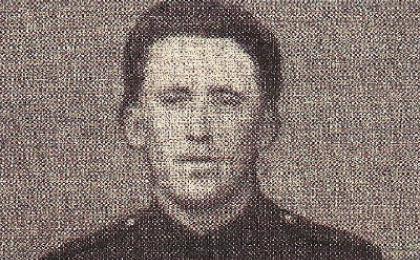
Garda Thomas Dowling will be remembered this Sunday (December 28th) with a commemoration at Craggagh Graveyard beginning at 14:00.
Parish priest of Ballyvaughan and Fanore, Fr Richard Flanagan will lead a prayer and blessing with a wreath to be laid at the site where Garda Dowling was killed. Among those due to make speeches include Fanore native, Joe Queally author of ‘Tragedies of Clare’ and former Editor of The Irish Times, Conor Brady. The ceremonial unit of An Garda Síochána will also be in attendance.
On the night of the 28th December 1925, Garda Dowling and his colleague, Garda John Cahill, were returning to Fanore Garda Station following a bicycle patrol when they were ambushed by a group of armed men. Garda Dowling was shot and died instantly.
During the early years of the Irish Free State, members of An Garda Síochána found it difficult in certain areas to gain acceptance and support from the public. Lingering tensions from The Irish Civil War meant that individual Gardaí were viewed with suspicion by those in communities that had not supported the Treaty that had led to the foundation of the Irish Free State.
Co Clare was considered an ‘Anti-Treaty’ county and as such, it was a place that could at times be a hostile to forces of the new Irish State.
Between 1922 and 1932, twelve Gardaí were killed in the line of duty nationally – two of these deaths occurred in Clare. Garda Dowling was killed at Fanore in on 28th December 1925 and Detective Garda Timothy (Tadgh) O’Sullivan in Tullycrine in West Clare on 15th February 1929.
Garda Dowling, a native of Ballyragget, Kilkenny, served in the Irish Republic Army during the War of Independence and for a time in the National Army before joining An Garda Síochána in 1924. Following his initial training he was allocated to Fanore Garda Station.
Fanore was a particularly challenging posting for a Garda in the 1920s. Poteen distillation was illegal but was not an uncommon activity in the area. Fanore’s close proximity to the Aran Islands and Connemara via sea crossing created trade opportunities for locals who engaged in this practice. Gardaí in Fanore, responding to political demands to clamp down on Poteen distillation robustly enforced the legislation that outlawed it. As a result, tensions arose between some sections of the Fanore community and the local Gardaí.
On the night of 28th December, Garda Dowling and his colleague, Garda John Cahill, were returning to Fanore by bicycle after having carried out a patrol. They had spent time playing cards in the home of a local man whose brother was a member of the Dublin Metropolitan Police.
At Creggagh Graveyard near Fanore, both Gardai were ambushed by a group of armed men. Garda Dowling was shot during the ambush and likely died instantly. Garda Cahill managed to flee without being physically injured. It is believed the attack was motivated by a dislike of the Gardaí emanating from their suppression of Poteen distillation.
Garda Dowling’s funeral took place in his native Kilkenny. His graveside oration was given by the then Deputy Commissioner, Eamon Coogan, a Kilkenny native.
A rigorous and somewhat controversial investigation of Garda Dowling’s murder took place. This led to prosecutions being taken that ultimately ended with those accused being acquitted.
Garda Cahill was involved in another violent incident in 1926 in Fanore in which he was injured in a confrontation with suspected Poteen distillers/ smugglers and soon after resigned from An Garda Síochána.