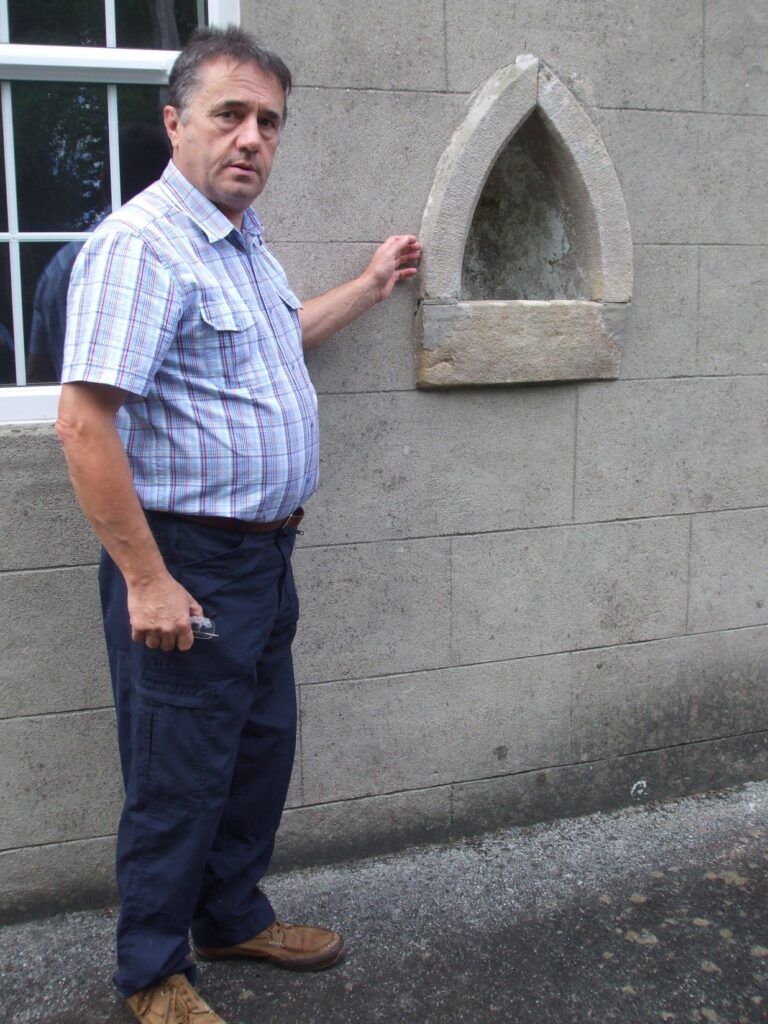
Pat O’Brien at Kilmore Church.
SHANNON ARCHAEOLOGICAL and Historical Society will have Broadford historian Pat O’Brien as their guest for the final lecture of the winter season.
Broadford native Pat O’Brien, a retired primary school teacher who has a masters in local history from the University of Limerick will deliver a talk on the landed gentry of Broadford.
In 2022, he published the 650 page book, Broadford Parish 1800-1850 – ‘The History of a Rural County Clare Parish During an Eventful’.
Taking place in Treacy’s Oakwood Hotel on Wednesday March 18th at 20:00 the talk is open to members and the general public. Pat expects to cover a much larger period of the history of the East Clare village which once had a population of more than 8,000 people and played a central role in the transport of people and goods from Ennis and north Clare to Limerick and Killaloe and onward to Dublin up to the late 19th century. The lecture is free to members of Shannon Archaeological & Historical Society and entry is €5 to non-members.
He explained, “What I’m hoping to do is to deliver an overview of the history of Broadford parish, including the relationships and contributions of the landed gentry in the parish. My talk, in summary, will go back as far as pre-history as Broadford has a huge number of dolmens and we will then come forward again to relatively modern times in Ireland”.
Broadford, or in Irish Ath Leathán was an amalgamation of two mediaeval parishes Kilseily and Killokennedy of about 20,000 acres. “The village developed around the broad shallow river crossing of the O’Garney River. It was close enough to Limerick city and was very much connected with the city. If someone was travelling from Ennis to Dublin or Tulla to Limerick, you went through Broadford. It was a very important centre and has a very rich history, an amazing history really,” Pat said.
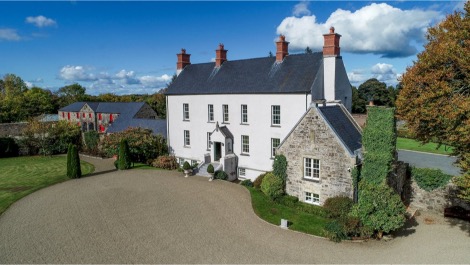
He continued, “I will be talking about the landed gentry of Broadford, their relations with the local community and their contribution and the principal houses associated with them. There is one particular individual that I think is really of national importance. She was a member of the Going family. Mary Going kept a journal during the 1840s and helped to found a scriptural school in the village. She was promoting the Bible and scripture and there was an inevitable clash with the local clergy as they were promoting the National school at the same time”.
Pat outlined, “The most prominent family in the parish at the time was the Arthur family. They were part of the real elite of Irish society with the London, Dublin and Paris houses, where the other gentry such as the Bentleys of Hurlestown, the Butlers of Doon and the Goings of Irish Hill, the Bridgemans of Woodfield House, the Halls and the Bourkes were more local residents involved as magistrates and landowners”.
The Arthur family were associated with Limerick from the 13th century and served as mayors and sheriffs and were prominent merchants in Limerick developing their own shipping and trading fleet working out of Arthur’s Quay.