
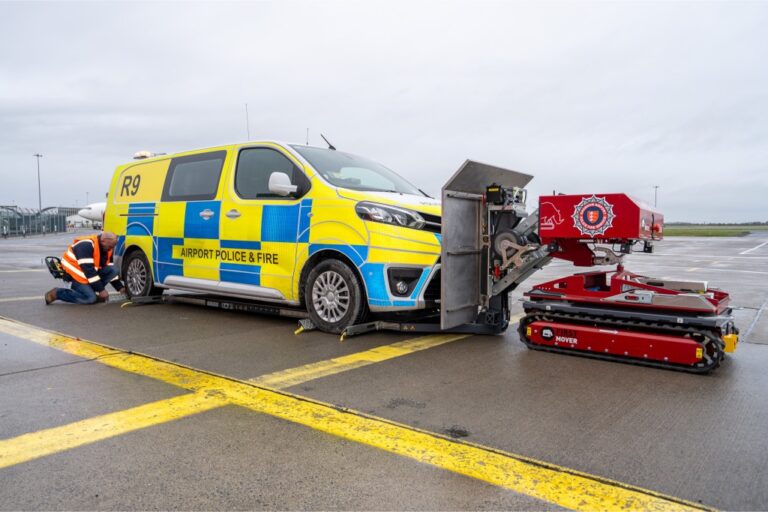
SHANNON AIRPORT has become the first airport in Ireland to use an electric vehicle moving system to relocate both electric and conventional vehicles.
A First-Mover R-3500 electric vehicle (EV) moving system is now in place at Shannon Airport. Originally developed to enable fire departments to safely combat EV fires, the unit is fully electric itself, remotely operated and capable of lifting and transporting vehicles up to 3,500kg.
Electric vehicles cannot be towed or lifted in the same way as traditional cars due to the placement and sensitivity of batteries.
With half of Shannon Airport’s fleet now electrified, the First Mover addresses an essential operational need, enabling airport teams to remove disabled vehicles quickly, reducing disruption and maximising efficient airfield management.
Mark Browne, Deputy Chief Officer of the Airport Police Fire Service said, “We’re delighted to be the first airport in the country to have a First-Mover on site and its really going to be a game changer in terms of maintaining a safe and efficient airfield”.
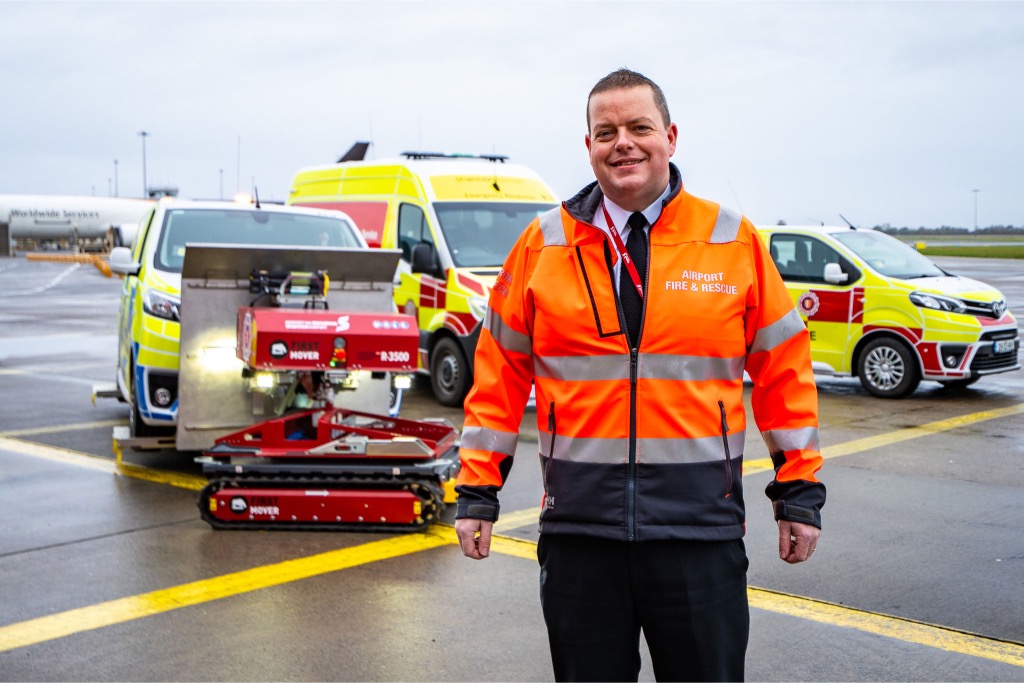
He added, “With 24 electric vehicles, which is 50% of our total fleet and growing – we needed a safe, reliable, and sustainable way to move EVs without risking damage. This investment not only strengthens airside efficiency and safety but also improves the experience for our passengers should any incidents occur in our public car parks”.
The First‑Mover is a tracked unit mounted on a flatbed vehicle lifting device and operates without the need for a jack or manual processes. The flatbed is pushed by the tracked unit under the vehicle, lifting it smoothly and, using the remote control, an operator can be at a safe distance of up to 100m from the unit while manoeuvring the lifted vehicle.
Introducing the First-Mover is part of Shannon Airport’s sustainability plan, it has recently achieve Level 3 Airport Carbon Accreditation, win two prestigious Green Awards (Green Large Organisation of the Year and Green Public Sector Organisation of the Year), and begin a €15m upgrade of the terminal building designed to improve energy efficiency and support a move away from fossil fuel systems.