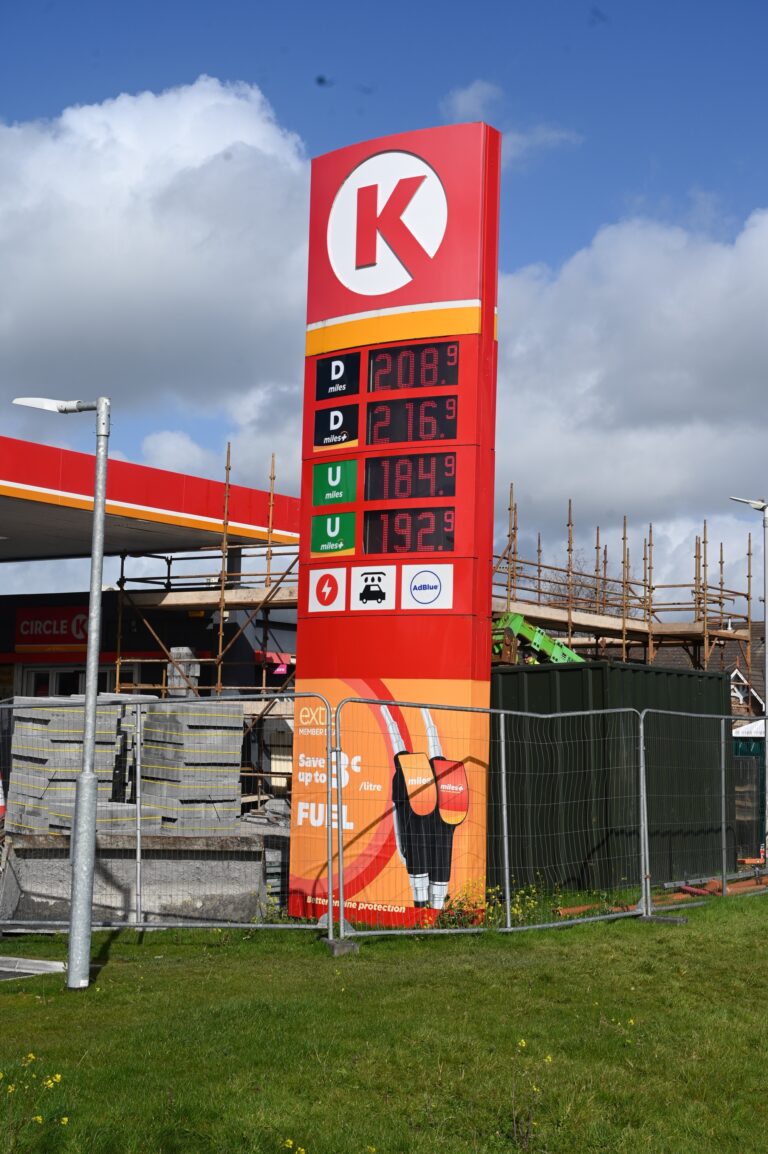

*Fuel prices in Circle K Shannon at lunchtime on Wednesday. Photograph: Joe Buckley
CUTTING EXCISE on petrol and diesel has been a “minuscule” measure, a leading Clare haulier has said while criticising the wait and see approach adopted by the Irish Government amid escalating conflict in the Middle East.
On Tuesday night, the Dáil voted to drop the excise duty on a litre of diesel by 20c and on petrol by 15c per litre until the end of May. A 2c per litre levy on both fuels that goes to the National Oil Reserves Agency (NORA) is expected to be paused for two months from the start of April.
Two weeks ago, the average price of petrol in Clare ranged from €1.82 to €1.85 per litre with diesel between €1.95 to €1.98. A rapid increase has occurred within the past fortnight with soaring oil prices sending petrol hovering on €2 per litre and diesel at €2.30.
Reductions came into effect on midnight on Tuesday with prices dropping to €2.08 for a litre of diesel and petrol to €1.85 per litre. In some instances, the reductions have not been implemented with smaller service stations still selling existing stock where a higher excise duty was paid.
Speaking to The Clare Echo, Eugene Drennan owner of Spa Transport said the reduction “is welcome and it is great”. He acknowledged minimum rates to charge per litre were “well controlled” within Europe but felt “they could have set a wider parameter for us as an island nation, that innovation didn’t come through”.
Drennan believes further innovation is required by the Irish Government, such as a swift transfer to alternative fuels such as hydrotreated vegetable oil (HVO).
“Ireland’s HVO hasn’t been used once, we have second rate and second grade HVO which gives us no power value, in Nordic countries they wouldn’t charge an excise on that”.
On the missed opportunity by not using HVO, he said, “it was the perfect time to put a cap on a European manufactured product and Ireland would have gone green overnight”.
Noting that language that politicians have used to describe the decision to drop the excise duty, Eugene said, “What significant might mean to a politician may not mean significant to us, we’ve been crippled by this. Dealing with the volume and returns we have, every cent is a prisoner and every cent is significant. Though we got the most fair play (hauliers), it is miniscule in the totality of the excise but it is very welcome to us in that we gained this through hard negotiations over the past ten years”.
Deputy Vice President of the Irish Road Hauliers Association (IRHA), Eugene welcomed the decision to backdate the diesel rebate scheme for hauliers and bus operators until January. “We are happy and grateful to have gone back to January with the forced rebate. The 20c has a VAT element of 23 percent so we only got 16 percent, it beggars belief really, if we’re getting relaxation on taxation and then they include a taxation you would hardly call it logic”.
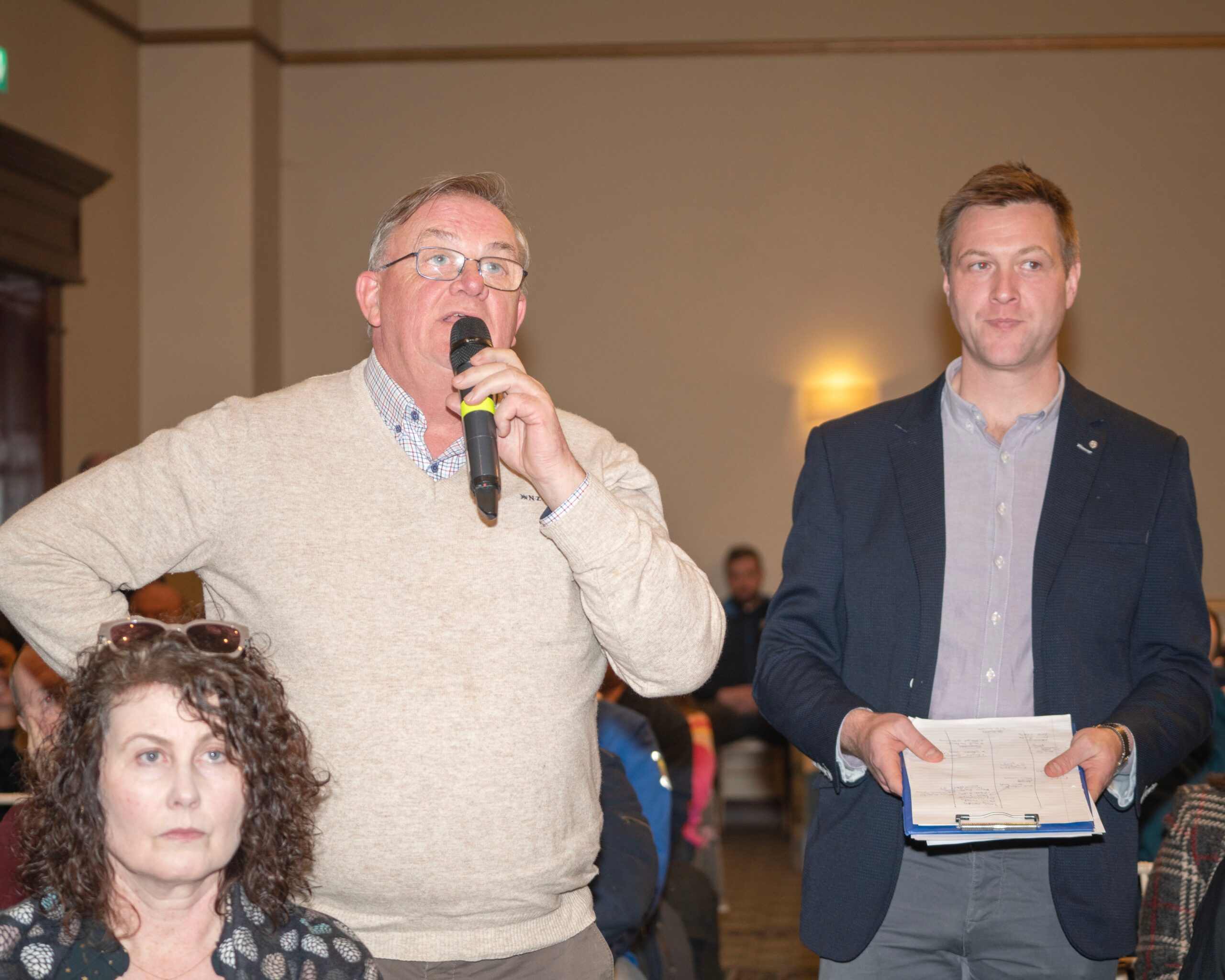
This is not Eugene’s first experience of a fuel crisis having been in business in the 1970s when the price of oil quadrupled. In 2026, a lack of urgency was evident from the Irish Government, he believed. “Wait and see doesn’t help people feeling the pinch. For the home heating oil, they didn’t stop to think can we see this winter out, we’re on the eve of warmer days, Ireland may not have kept the price up but the Government should have guided it, people do need oil and older people especially. They may have had enough supply but it created a surge with their approach”.
“It was unbelievable to see we couldn’t get a price for the fuel drop until the day we got it when it was known for three days the duty to be paid when it arrived, now the oil companies said they couldn’t quote a price and now that we have the reduction we have people saying it might take three or four days to filter through, there’s a conflict of procedure there because they can decide not to give it and charge the highest price but not reduce it is as quick. People have sub-depots and are caught with the costs in their tanks but that is part of their business and they can charge immediately on the upper side. There is definitely a touch of that on the home heating and a fear or an indication that they may have been gouging,” Drennan added.
Overall he was pleased with how the negotiations from the IRHA fared. “We’re happy that our negotiations from the last six years made sure we were at the table, we’re not happy with what they consider significant because it isn’t, they have indicated the door is open if it goes pear-shaped and we will be back in fairly fast. I still don’t know why did Europe dither in the hope that Trump might change his mind”.
Ireland’s lack of an oil or gas reserve leaves the nation vulnerable to further price hikes while the conflict continues. Eugene said “We’ve paid billions, we’ve raised this issue for ten years, we’ve paid for national oil reserve agents, it is a semi-private company in the state with a full-board, they have very expensive executives but money hasn’t gone to oil reserve agency for years, it has gone on cycle lanes, we’ve paid money but where is the oil, it is earmarked and now that push has come to shove, we’re an essential supply chain in that loop so why hasn’t it been coming through, it is a very high price time now to lessen the need for the State and these services to get fuel out of the general supply coming in. The State had a perfect time when this war was looming to hedge their price, they could have hedged their price and back it up for three months or hedge their price against the oil reserve we bought cheaply a number of years ago. It is sorted in Spain and the Nordic countries but we don’t know how it will filter through, they could have hedged their price at 1.30 which would be 70 or 90c less than today. The State ran with the bookie to no odds, they didn’t take cognisance of what the crisis was and how serious it was, they were waiting to see what Trump and Europe would do, they should have said Ireland needs it. My approach in business is it is safer to be looking at it than looking for it”.