ACROSS rural Ireland, vacant buildings often stand as reminders of changing times.
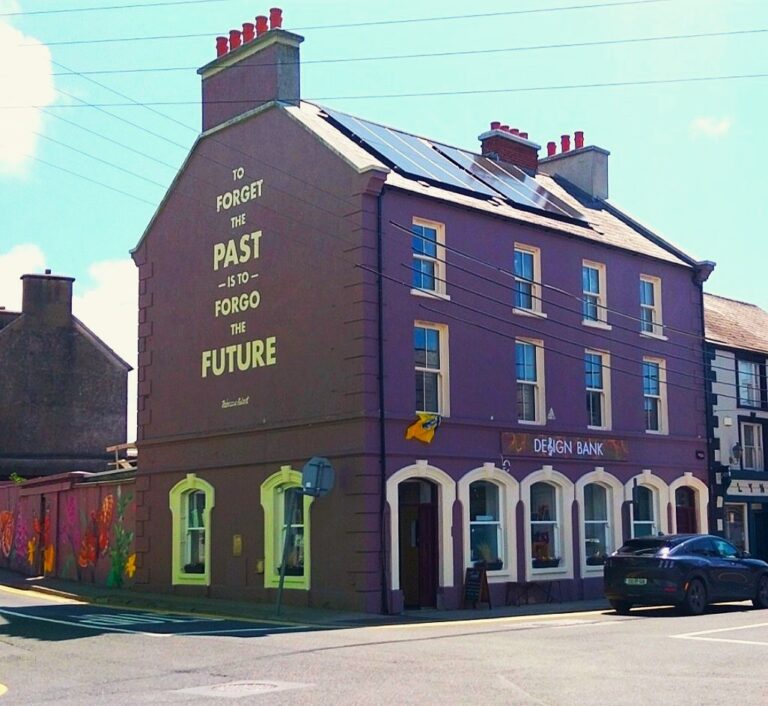
In Miltown Malbay, Co. Clare, one such building – a former bank – has been transformed into a thriving hub of creativity thanks to the vision of Aoife O’Malley and the support of the LEADER programme.
Purchased in 2022, the property was first earmarked for apartments. Aoife, however, recognised its potential as a cultural and economic asset.
With its central location, and distinctive heritage features such as the bank’s original vault, safe and countertops, it offered an ideal setting for a new community initiative. Drawing on her hospitality background, tourism network, and her belief in the importance of socialisation, she set out to create a space that would benefit locals and visitors alike.
Turning Vision into Reality
Aoife’s vision became Design Bank: a co-working and retail space hosting artisans, craftspeople and artists. This social enterprise aims to strengthen social connections between makers and the public, enhance the visitor experience, and add to Miltown Malbay’s cultural vibrancy.
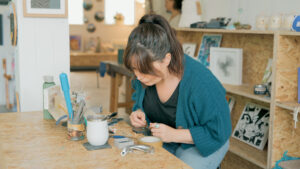
The journey began in July 2024 with a three-week ‘Meet the Maker’ pop-up during the Willie Clancy Festival, a major annual celebration of Irish traditional music, song and dance. 25 local makers showcased their work to enthusiastic festivalgoers, which demonstrated demand for a permanent creative space. Aoife, with the assistance of others, went on to host pilot events throughout late 2024 – from family-friendly workshops to intimate concerts and storytelling. These experiences helped to refine the business model and further proved the need for a year-round hub.
Major upgrades were required to make the building operational year-round. Support received under the 2023-2027 LEADER programme enabled Design Bank to install roof insulation, heating panels and automatic front doors. Funding also covered essential infrastructure, including soundproofing, furniture, refrigeration, and a picture-hanging system.
With works complete, Design Bank officially opened in June 2025. As Aoife emphasised, “The project would not have been possible without LEADER support. CLDC (Clare Local Development Company) were wonderful, just to guide us through the application.”
Economic & Social Impact
Since opening, Design Bank has had a significant impact. It has created three jobs – all held by women – and now hosts a rotating collective of over 60 makers showcasing and selling their products. A 5% commission on sales goes into a communal fund, redistributed among those who commit to staffing the premises once per week, incentivising makers to promote each other’s work.
For Aoife, the project is about more than revenue alone: “This space needs to be commercially viable, but it’s unlike other businesses in that the quiet times are important too because it gives the creators a chance to talk to each other. And that’s equally as important to me. That’s what the whole idea of it initially was, you know, that people get a chance to talk to each other, get ideas, collaborate.”
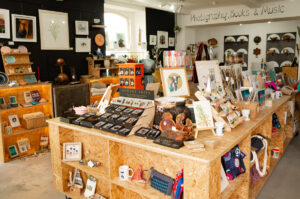
The impact extends beyond the building. It acts as a catalyst for economic activity for surrounding businesses such as cafés, shops and accommodation providers. Its location, just 20 kilometres from the Cliffs of Moher, positions it to capture tourism flows, particularly with the recent launch of a shuttle bus linking the two destinations.
Socially, it has become a hub for interaction and creativity. Open daily, visitors can meet makers, hear their stories, and see live demonstrations. Children in particular respond with enthusiasm. As Aoife noted, “Children are fascinated by talent, whether it’s Ronaldo or Messi or whether it’s an artist or maker. And I think a great way to entice them from technology, for a little while at least, is by captivating their interest with something else, something creative that they could see themselves making.”
Model for Rural Regeneration
Design Bank demonstrates how rural towns can regenerate by reimagining their assets. With vision and support, these spaces can be transformed into cultural and economic drivers.
As Agnes O’Shaughnessy, LEADER Coordinator at Clare Local Development Company (CLDC) explained, “Design Bank adopts a social enterprise model which can be replicated in other areas. By redeveloping the old bank building into a very interactive maker space and venue for community activities, it is a very good example of rural regeneration and highlights the added value of the LEADER programme.”
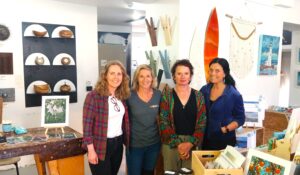
Looking ahead, Aoife is eager to build on the momentum created to date. With plans for further expansion, in the line of a food court, she intends to return to LEADER for additional support – ensuring the project continues to grow as a long-term community asset.
Valuable Lessons
Design Bank’s journey offers insights for other communities considering similar initiatives:
- Test before scaling: The ‘Meet the Maker’ pop-up and other pilots provided proof of concept, allowing refinement and reflection before major investment.
- Collaboration matters: A rota system, which enables makers to get involved while balancing family and work commitments, has proved extremely effective. Each individual commits to at least one three-hour slot weekly, with flexibility to swap shifts via a WhatsApp group if needed. This fosters teamwork and shared ownership.
- Avail of local supports: Design Bank benefited from expert guidance along the way. CLDC supported the project from the Expression of Interest (EOI) stage to completion, while the Local Enterprise Office also provided advice during the application process.
This project was supported as part of the 2023-2027 LEADER Programme under the theme of Economic Development and Job Creation, and the sub-theme of the Green Economy. The Local Action Group is Clare Local Development Company (CLDC).